Building Skills in the Kitchen: Benefits of Baking at Home
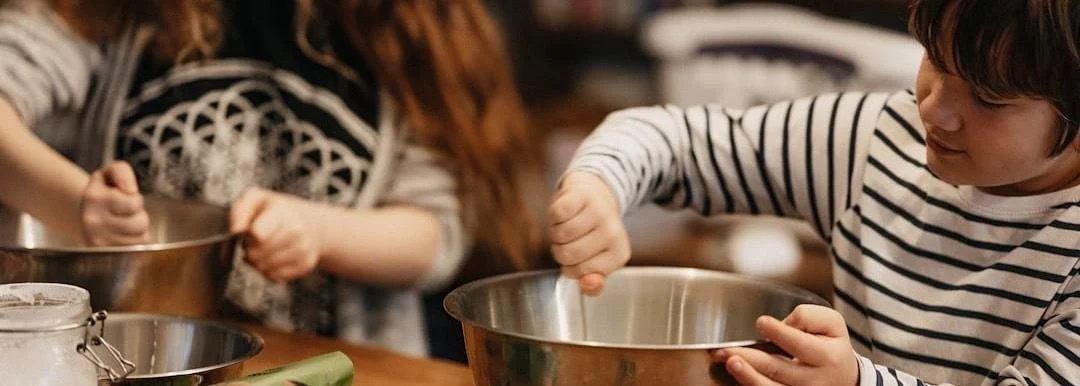
Baking is a fantastic Practical Life activity that can be enjoyed by children from the toddler stage through upper elementary and beyond. It helps children develop important skills such as independence, concentration, coordination, and the ability to follow a logical sequence of action. As they work through the baking process, children also build stamina and strengthen the muscles they’ll need for writing, especially when mixing ingredients.
It's important to remember that baking is not a “clean” activity—ingredients are likely to spill along the way. To minimize stress, it’s helpful to think ahead about how to handle these spills. Do you have a dustpan and brush nearby? A sponge or damp cloth for cleaning up flour spills? Planning for these moments can reduce frustration when accidents happen.
In the following sections, I'll share ideas for how to incorporate baking into your home routine, tailored to different stages of child development.
Toddler
Baking is a fun and engaging activity for toddlers. Think of it as a cooperative task where you work together. Before you start, have the ingredients prepared, pre-measured, and organized in toddler-friendly containers. Simple mixing cups or small bowls work well for this.
One great recipe for toddlers is banana bread, shared by a friend who is a toddler guide. Here’s how it works:
The dry ingredients are pre-mixed in one container.
A separate container holds the sugar and banana.
Another bowl has the egg, and another holds the oil.
When you first introduce this activity, show the child how to add each ingredient to the bowl and mix it together. The child can mix with a little help (as needed). Give your child the time to spoon the batter into the greased pans. And then the adult can place the pans in the toaster oven. You can put the pans in the oven and once they are finished, enjoy a lovely snack together.
This process gives toddlers the opportunity to feel involved and build confidence while having fun in the kitchen.
Here is a favorite recipe for banana bread to use with toddlers:
1 cup all purpose flour
1/2 tsp baking powder
1/4 tsp salt
1/4 tsp ground cinnamon
scant 1/4 granulated sugar of choice
1 egg or egg replacer (we have used 1/4 cup unsweetened applesauce)
1/3 cup flavorless oil
1/2 cup mashed banana.
Preheat oven to 350
Mix ingredients until just combined
Scoop into 2 greased mini loaf pans
Bake 25-27 minutes or until golden brown and firm to touch.
Primary
For primary-aged children, baking can still be a collaborative experience, but as they gain confidence, they'll start doing more of the process on their own. The goal is to gradually support them as they develop independence in the kitchen.
The ingredients are laid out in order with matching measuring cups, though they aren’t pre-measured like they are for toddlers. This may lead to some learning moments, like discovering what happens if too much sugar or too little baking soda is added. I usually place the measuring cups or spoons next to the corresponding ingredients to make it easier for them to follow.
Older primary children can read the recipe themselves, while younger ones can use a color-coded system to guide them through the steps.
As they get older, the child will become more independent. By the time they are ready to bake on their own, they will also help with cleaning up while the bread bakes. We often use the same banana bread recipe we use with toddlers, but sometimes we double it to fill a larger pan.
Elementary (and beyond)
As children reach elementary age, they gain more independence in the kitchen. They can choose a recipe, read it, find the ingredients at home or make a list and buy the ingredients from the store with adult help, if needed, and organize their workspace. By this age, they can usually follow the recipe with minimal help from adults.
At home, your elementary-aged child can bake on their own. They can select a recipe, arrange the ingredients and measuring tools in order, and work through the steps with little guidance. They can also begin taking on more cooking tasks, like making scrambled eggs or preparing simple meals for the family.
Resources
Accessibility aids independence. Offering tools that are child-sized assists your child in being able to bake or cook more easily. You can find child-sized kitchen tools from For Small Hands, World Market, IKEA and sometimes Target. These child-friendly cook books share recipes that are geared towards particular ages:
For the youngest children, a Sous Chef Tower is quite helpful in building independence and offering the chance to safely reach the counter or the sink. A simple stool or sturdy chair can also work for the Primary-aged child.
Happy baking! 😉