Three Simple Tools That Brought More Flow to Our Homeschool Days
This school year, I’ve added three things that have helped to streamline our day and my planning. For reference, I have 3 children in 3 planes of development - primary, elementary and adolescent. We recently moved, and with our new home’s layout, our homeschool setup has become much simpler. Less space meant rethinking how we stay organized, support independence, and maintain a prepared environment.
Here are three changes that have made a meaningful difference in how our days flow.
1. A Rolling Cart for Daily Essentials
With our kitchen table becoming our main workspace in our new house, I needed a solution that was both compact and functional. Enter the rolling cart. It has really been a game changer.
The cart has three tiers—one for each child.
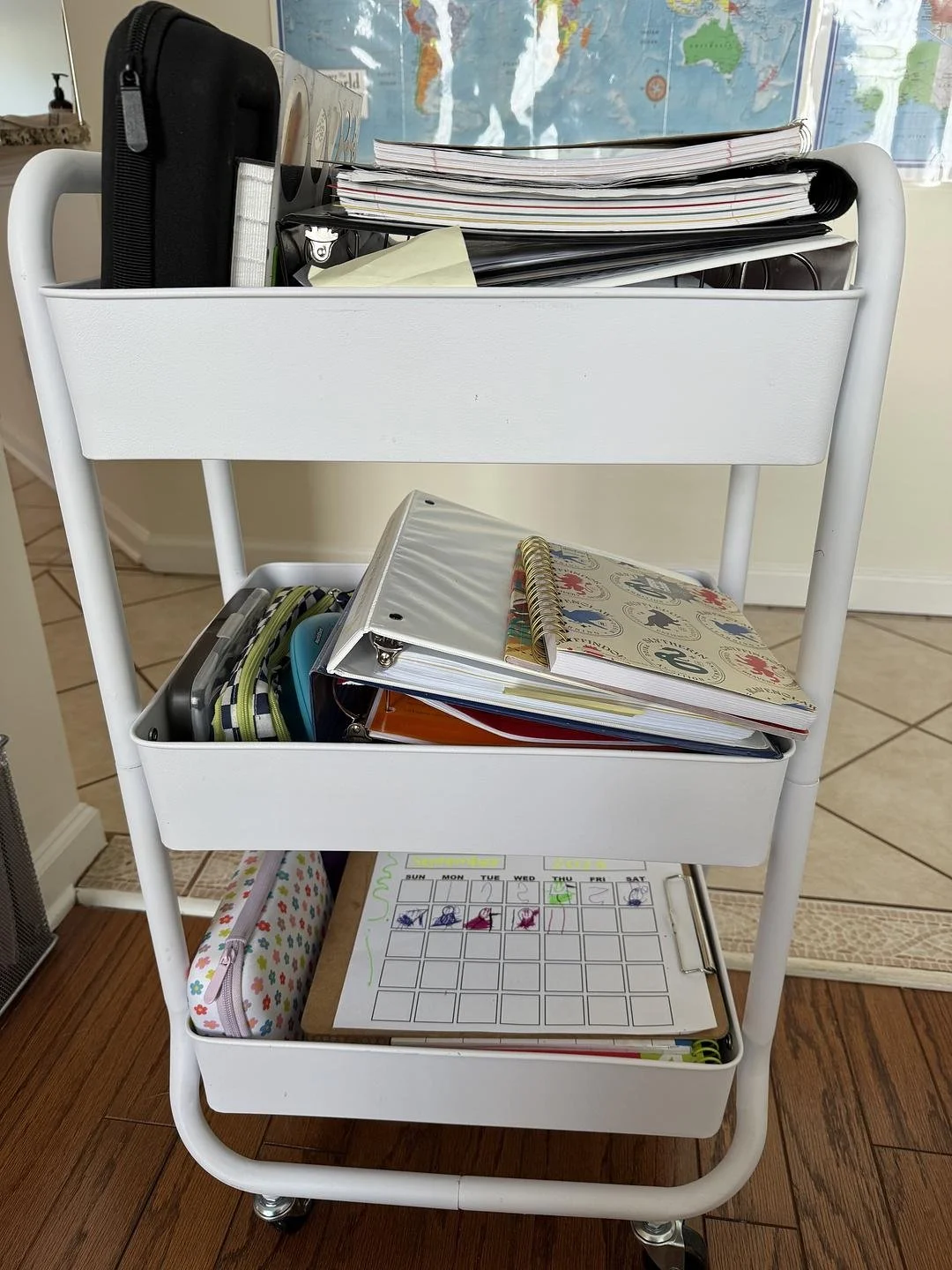
It holds:
A pencil box per child
Notebooks and planners
Current read-aloud books
Any paper related materials needed for the week
Each morning, the children wheel it over to the table when it’s time to begin. Because everything has a designated place, we’ve found ourselves more focused and less cluttered. It’s actually more organized than a shelf—since everything must fit within each tier, it naturally limits how much we store. It also makes it easier for us to jumpstart our day.
This simple system supports independence and order—two values at the heart of the Montessori approach.
2. Our “Command Central” Whiteboard
This whiteboard** has become a visual anchor of our homeschool day and week. It’s where we all check in, stay aligned, and share responsibility for the flow of our day.
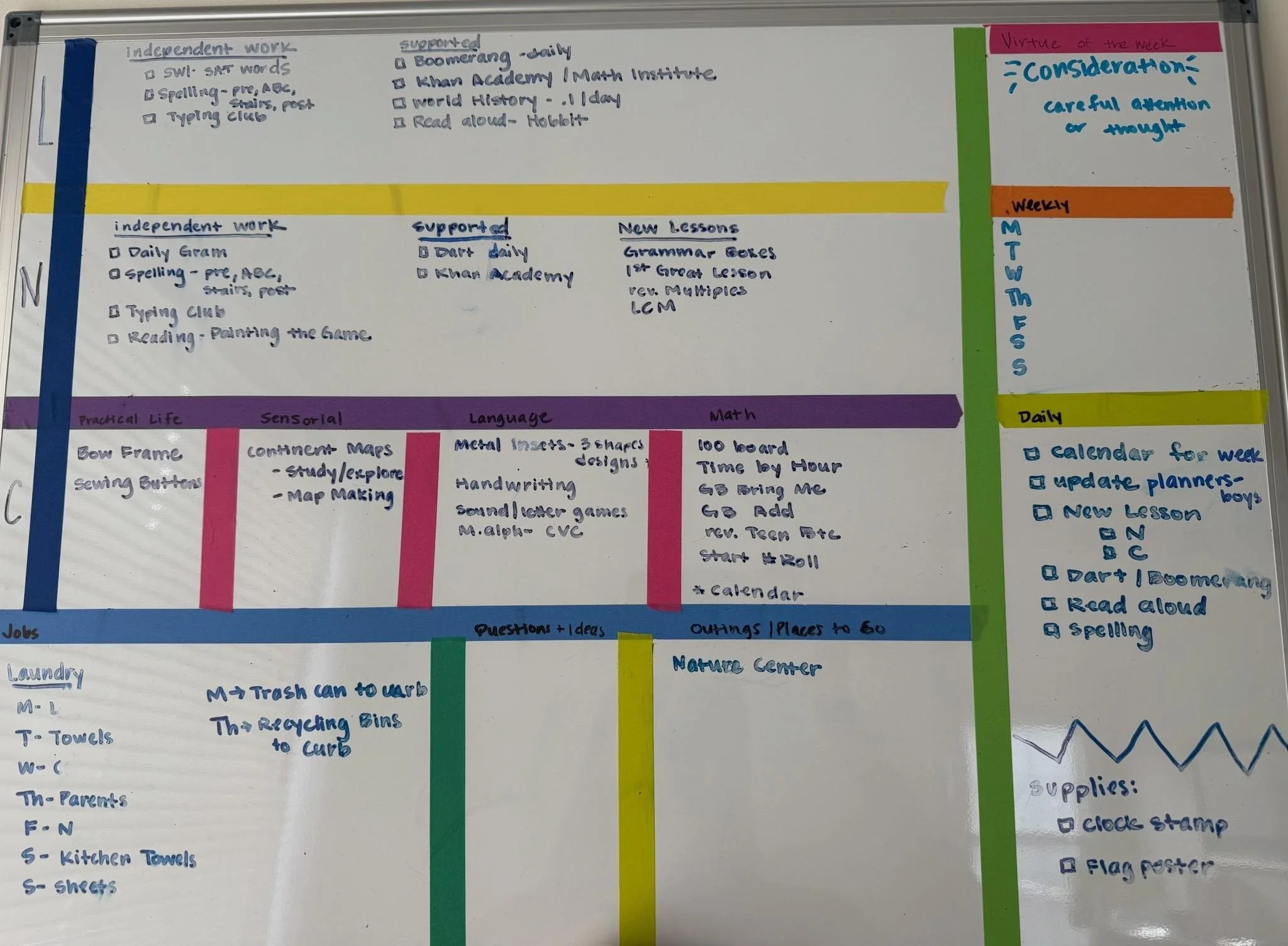
Here’s what lives on the board:
A section for each child with:
Independent work
Work that requires support
A list of upcoming lessons
Household responsibilities:
A simple laundry rotation (each person has their day)
Reminders for trash and recycling days
Our Virtue of the Week and its definition
A "week-at-a-glance" calendar: outings, practices, classes, and games
A space for "outing requests" or big questions from the children
This tool has been helpful not just for me, but for the children as well. It offers a sense of structure while encouraging independence. They know what’s expected, and I can easily glance to see what lessons to prepare. This also supports me as I’m a more visual learn
Pro tip: For information that needs to stay on the board longer (like daily work or chore schedule), use wet-erase markers instead of dry-erase. They’re less likely to smudge and keep things looking clean throughout the week.
3. A File Box for Finished and In-Progress Work
In previous years, I used a single basket to collect finished work—and every so often, I’d sit down and sort through the growing pile. It worked, but it also created extra work.
This year, I’ve switched to a file box system.
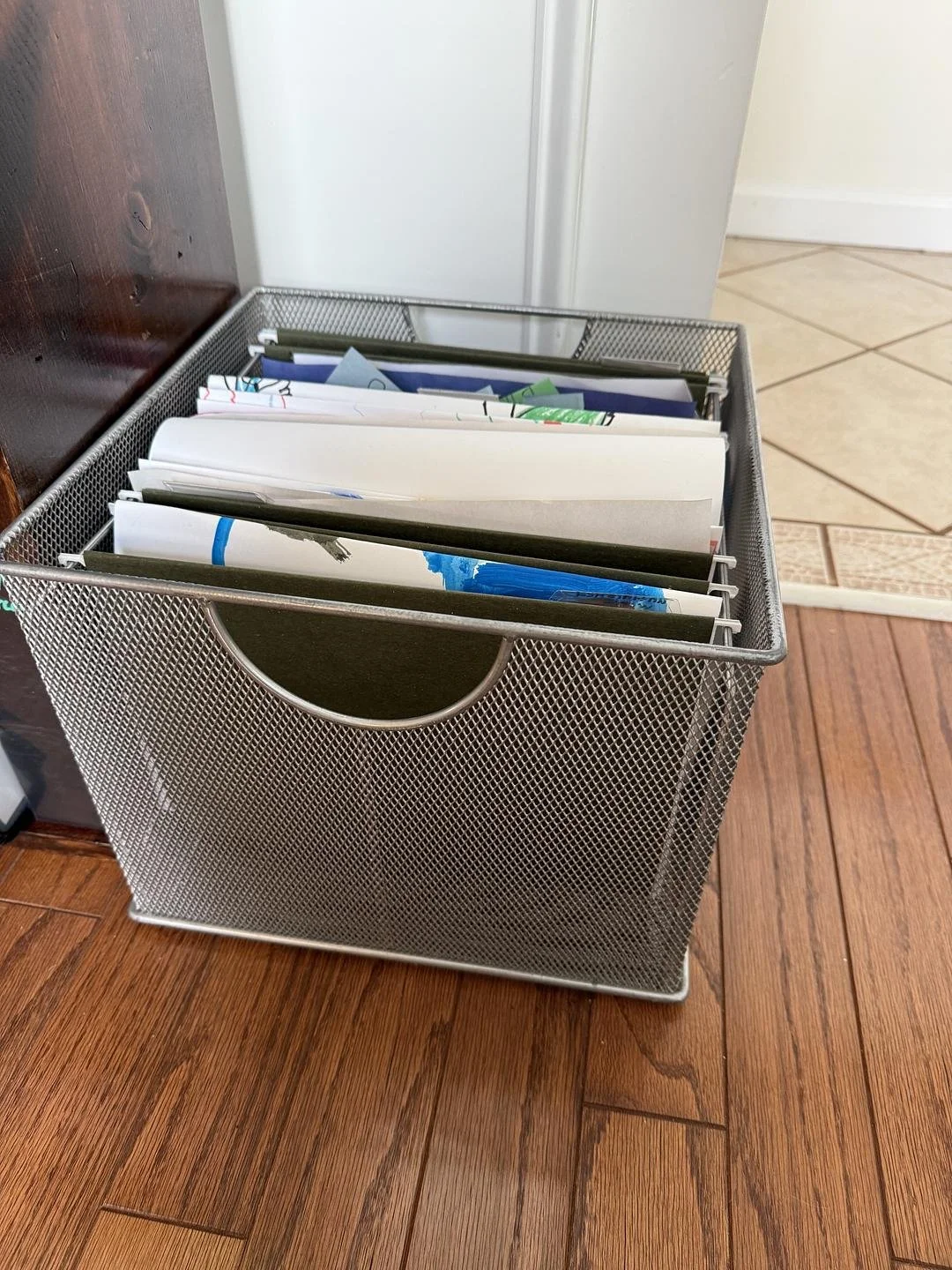
Each child has a section with folders for finished work and there’s also a single folder for work in progress.
This system has made it so much easier to manage paper. It’s simple to maintain, and we’re able to keep it from overflowing by doing a quick sort when it gets full.
More importantly, the children know exactly where to place their work. They can manage their papers independently, which supports both accountability and ownership of their learning.
Final Thoughts
None of these tools are elaborate or expensive—but they’ve added some clarity and rhythm to our days. Each one supports the kind of environment we strive for: one that is orderly, intentional, and responsive to the developmental needs of each child.
Sometimes, the smallest changes are the ones that bring the most peace.
** here’s a link for another take on the white board, shared from one of our awesome Hub members.