Building Strong Hands for Writing
Did you know that developing strong handwriting skills actually begins with the body—not just the hand? Writing is a complex task that involves coordination and strength from the hand, arm, shoulder, and even the core muscles. In Montessori, we understand that supporting the hand means supporting the whole child—physically, emotionally, and developmentally.
The Foundation: Practical Life
In the Montessori approach, we begin with the child’s natural desire to participate in real, purposeful work. Practical Life activities are at the heart of developing fine motor skills—and they do far more than prepare the hand for writing. They help the child build independence, concentration, and confidence.
For Toddlers:
Young children are eager to do things for themselves. Simple activities like squeezing a sponge, pouring water, or using a cloth to clean a surface all strengthen the small muscles of the hand while inviting focus and care. Carrying a tray, climbing stairs, and even dressing independently build the core strength and coordination that support writing later on.
For Primary Children:
As the child enters the Primary years, Practical Life work becomes more refined. Food preparation, pouring with control, or working with dressing frames support not just coordination, but also sequence, concentration, and independence. Activities like cutting, sewing, and art support the fine motor development necessary for writing. Each small movement—threading a needle, snipping along a line—strengthens the muscles of the hand, while also inviting creativity and persistence.
We often begin handwriting on chalkboards, sometimes placed vertically to promote proper grip, wrist extension, and posture. This positioning supports healthy habits from the start.
As Dr. Maria Montessori reminds us in The Absorbent Mind:
"He does it with his hands, by experience, first in play and then through work. The hands are the instruments of man’s intelligence."
For Elementary Students:
In the Elementary years, children are ready for big ideas—and big work. Their writing shifts from practice to fluency. They often handwrite their first drafts and work through the process of editing and rewriting before typing final copies. Writing by hand helps anchor ideas and improves memory. Professor Kuniyoshi L. Sakai, a neuroscientist at the University of Tokyo, shares, “Actually, paper is more advanced and useful compared to electronic documents because paper contains more one-of-a-kind information for stronger memory recall.”
Supporting Writing Muscles at Home
Toddlers:
Invite your toddler to do things for themselves. Dressing, feeding, pushing a heavy object, carrying laundry, and working with playdough all help strengthen their bodies in preparation for writing later on.
Primary:
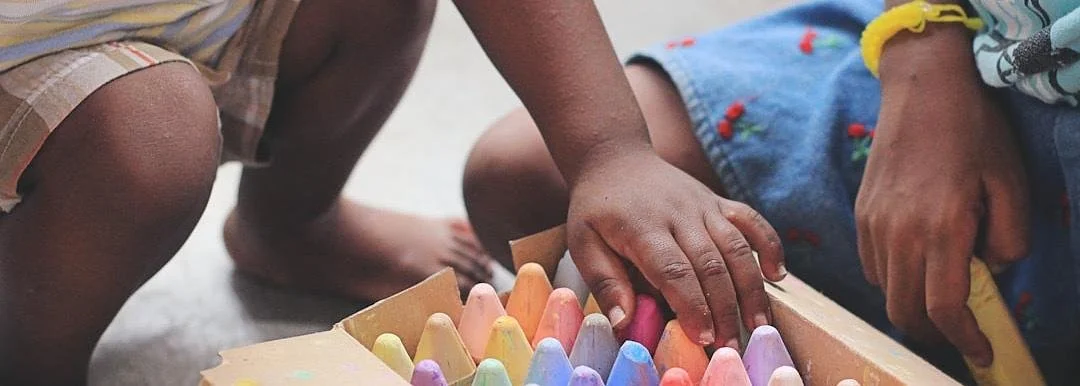
Connect movement with learning. Drawing on the driveway with chalk, creating an obstacle course, or helping transfer laundry from washer to dryer can all strengthen the core and upper body. Movement and learning go hand in hand.
Elementary:
For the Elementary child, writing becomes a tool for expression. Offer meaningful ways to practice—writing a grocery list, a letter to a loved one, or even creating a comic strip. At our home, step-by-step drawing tutorials have been a favorite for building both interest and control.
Extra Support
If writing feels especially challenging for your child, remember that handwriting develops over time. Some children benefit from working with an Occupational Therapist to support motor development more directly.
There are also helpful tools you can try at home:
Body Support Balance Disc: Helps engage core muscles while seated.
Bouncy Bands: Offer movement for feet and support focus.
Slant Boards: Encourage wrist extension and proper grip.
Small writing tools: Short pencils, small chalk, or broken crayons help promote the tripod grip naturally.
Above all, trust the process. Writing is a skill that develops through movement, repetition, and meaningful work—just as Maria Montessori envisioned.