Prepared Environments: Home Edition

As you get started or continue along your Montessori journey, considering how you prepare your space to meet the needs of your child is a huge piece of the Montessori puzzle.
In Montessori training, we can see the interconnected relationship between the child, the prepared adult and the prepared learning environment by using a triangle (as illustrated).
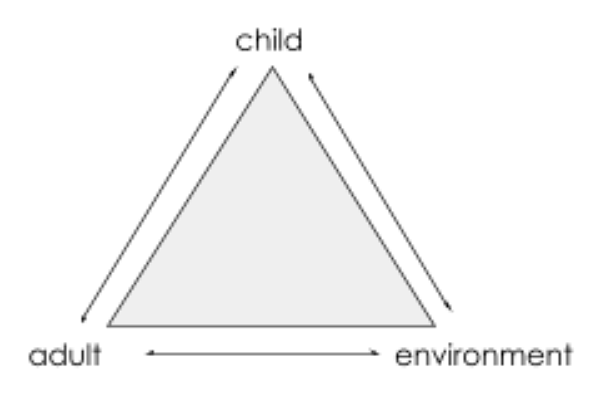
The adult is carefully prepared to connect the child to the environment. The environment is carefully prepared for the work of the child and the careful guidance of the prepared adult. The child continues to have a relationship with both the adult and the environment.
When the child is not working with ease or connecting with the environment (and materials), we first look to ourselves and carefully observe. Consider the lessons being offered: Are they too easy? Are they too difficult? Is the child uninterested? Could I improve the delivery or timing of my lesson?
Then we turn to the environment. Is the environment too loud or too quiet? Is it too cluttered? What kind of distractions can I observe and adjust? How is the routine? Would the child benefit from outdoor time before work time?
Once we determine what needs to be done, we begin to make adjustments. We recommend keeping the work-space uncluttered and accessible for the child. In a Montessori primary environment, everything has a place and the pieces are together (and intact). Sometimes items are rotated in object boxes or the puzzles that might be on the shelf to help bring new interest to what’s available. We prefer not to keep more than one of any given item out on the shelf at one time. This helps to promote respect and care for the items that are available.
The key is to observe and then adjust accordingly.
Dr. Montessori wisely shared, “The first aim of the prepared environment is, as far as it is possible, to render the growing child independent of the adult.”
So, what can you do at home? Let’s go room by room.
In your child’s work space:
Designate a space for supplies (paper, pencils, crayons, etc.). This could be an “art cart” or simply a shelf. This is also geared for the child 4 and up, who can make choices and return them where they belong. This process of using something and returning it will likely require a quick lesson from you, as the parent, on how you want this to be done at home.
Your child will need a table and chair sized for them (make sure their feet can touch the floor when they sit in their chair. If not, place a stool under their feet while they work). Floor tables or work rugs are also wonderful options for work.
If you have activities for them to do in their work space, set them out on a shelf. Or, if space is tight, you can organize them on the floor.
Use baskets and trays to help define the space and items for each activity.
In the kitchen:
Make sure you have a stool for your child to use to reach the sink.
You may want to choose a low cabinet to place some plates, bowls, cups and silverware for your child to use.
In the pantry and refrigerator, you can have a basket on a low shelf with pre-approved snacks.
In the bathroom:
A stool to reach the sink.
Depending on the size of your child, a stool for the toilet may also be beneficial.
Overall, you can adapt your environment over time to meet your child's needs. Make sure to talk with your child about any new procedures, routines or re-arranged spaces so that they are aware. As the adult, you have a key role in the relationship between the child and the environment. You are what helps make the environment and the materials come alive for your child.