Montessori Homeschool for Ages 3-6
Your child’s development and curriculum needs for Preschool & Kindergarten (the Primary Years)
The Primary years are where Montessori starts to look like what most parents picture: hands-on materials, focused independent work, and visible leaps in language and math. This is the plane where the famous "explosions" happen: into reading, into writing, into numbers, often within the same season.
You won't need to buy out a curriculum catalog to get here. A small set of core materials, used well and in sequence, does more than a shelf full of disconnected activities.
What to Expect Developmentally for Ages 3-6
Children in this stage are building concentration, refining fine motor skills, and moving toward real independence in daily tasks. They're capable of far more focused work than most people expect when the environment and materials support it.
How to Prepare as Your Child’s Guide
The 3-6 child has immense opportunity for learning, and as parents, we feel deeply responsible. That is a lot of pressure. The good news is, you don’t have to get this perfect from the beginning; you just need to make one small shift at a time.
In Montessori education, the teacher is called the Guide. Their role isn't only to know what to teach. It's to prepare the environment so the child can succeed in that lesson and over time.
The same is true in the home learning environment. You are the Guide!
For Montessori to work in your home, you must begin with your own vision and values, not by replicating what you've seen online. Only then does it make sense to plan a schedule, print a lesson, or DIY and purchase materials. This ensures you build something that fits your life and will stick for your family. The Montessori Homeschool Hub prepares parents to guide their children through Montessori education from ages 2-12, with step-by-step lessons, courses, and group calls led by two trained Montessorians and alongside like-minded homeschooling families.
How Much Time Does it Take to Homeschool Ages 3-6?
This is one of the most common questions we hear from new Montessori homeschoolers.
In the toddler years, the child learns throughout the day within their natural rhythm. For ages 3-6, you will move toward a Work Cycle.
What is the Montessori Work Cycle?
The Work Cycle in the Montessori Method is an uninterrupted block of time where your child chooses their own work and follows it through. It is central to Primary Montessori. It's what builds concentration and self-direction, and it looks different in a home than in a classroom, but the principle still holds.
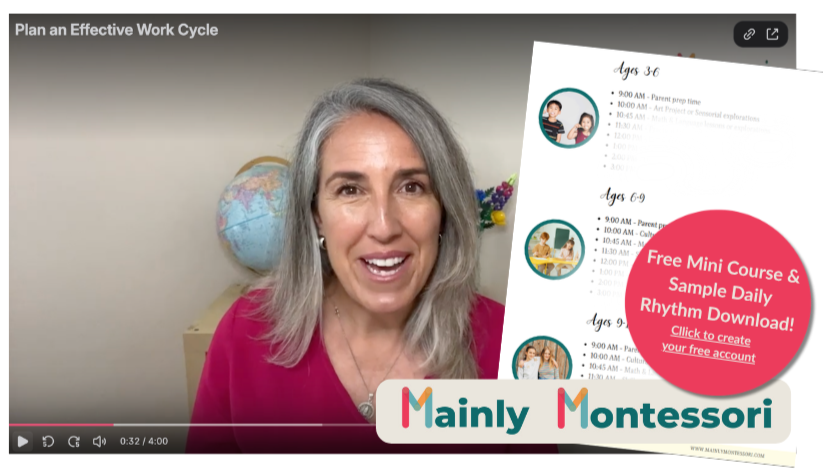
In our free Montessori Essentials Course, you can learn how to implement a Montessori Work Cycle in homeschooling. Hear from Pilar Bewley, a trained Montessorian and homeschool mom, about how many minutes a Work Cycle should be per age and how a Work Cycle is an arrival point and not a switch you will flip. Plus, download the freebie Supporting the Work Cycle at home, which covers sample daily rhythms with adaptable routines for different ages. Create a free account to access this course, freebie, and other resources to help you get started!
What’s Different in Montessori for Ages 3-6?
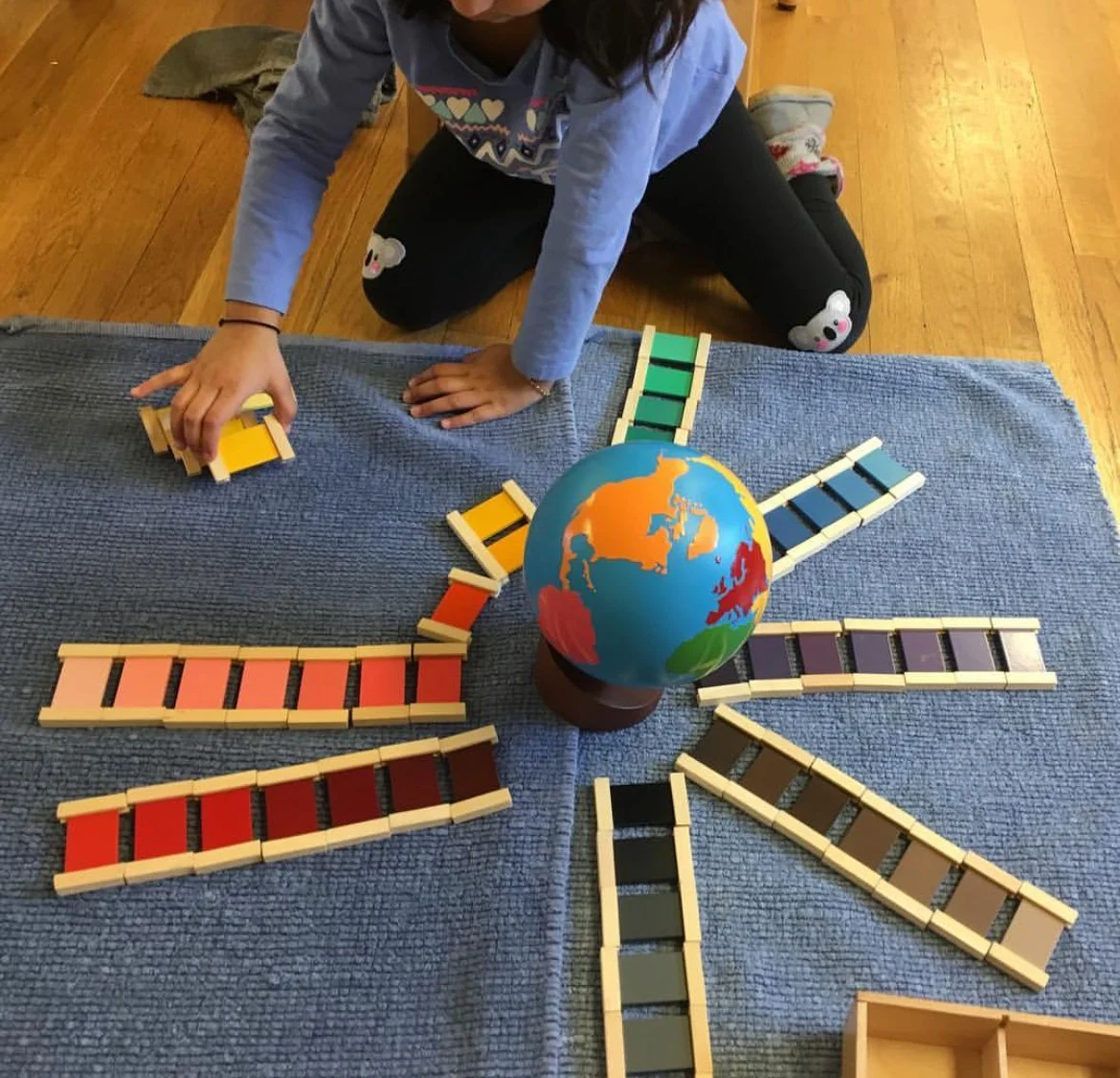
The lessons and materials used in the Montessori Method are unique and beautiful. This is for good reason! The precision, control of error, and even weight of each material help the child better absorb the concept at hand.
For ages 3-6, the Montessori Method also relies on a Work Cycle or period of uninterrupted learning, discussed in detail above, for a homeschool setting.
Phonetic Reading
Sounds before sight words! Montessori teaches reading through sound, writing, and encoding first, before formal reading. Children learn letter sounds, build words with movable letters, and often begin writing before they read fluently, the reverse of how many programs sequence it.
Practical Life
Real tasks like pouring, food prep, and care of self and space build coordination, focus, and independence. They're not busywork; they're the foundation the academic work builds on.
Concrete Math
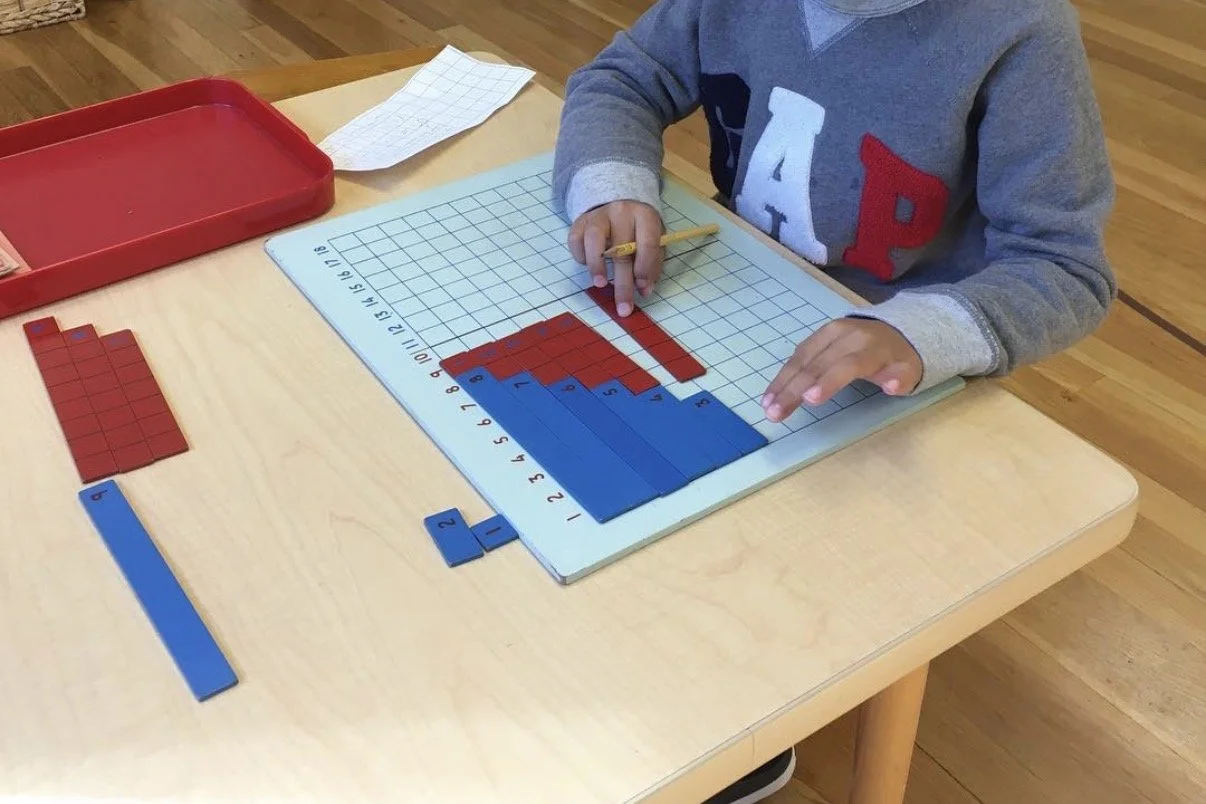
From beads to abstraction! Bead material and other concrete math tools let your child physically handle quantity before they're asked to work with abstract numbers. A child who's worked with the golden beads (units, tens, hundreds, thousands, each represented by a different physical quantity) understands what "1,000" actually means in a way flashcards can't teach. Over time, that same concrete experience becomes the bridge to abstract math work later in Primary and into Elementary.
You’re not behind.
If your child is already 4 or 5 and you're just starting, you haven't missed the window. Montessori materials meet a child where they are, not where a calendar says they should be.
The Montessori Homeschool Hub offers a complete curriculum, guidance, and community to help you get started today.
Ready for Homeschool Curriculum & Community?
Join hundreds of families from across the globe and AMI trained Montessori Mentors in the Montessori Homeschool Hub community.
For ages 3-6, you will find:
A complete curriculum with expert guidance to help you implement across ages
A community to help you put it into practice and get inspired when you need it
Workshops, forums, and resources like our DIY & Buy Sale Trade space
Trainings on Positive Discipline to help you maintain connection while teaching, The Art of Observation course to help you follow your child as the confident guide, and so much more.
If you’d like to explore the Hub before investing, the free Montessori Essential Mini Course is a wonderful place to start!
What Comes Next?
Around age 6, most children are ready to move into Elementary, shifting from concrete, hands-on Primary materials into the bigger-picture, research-driven work of cosmic education.
Keep Learning About Your Primary-Age Child & Montessori