
Our Blog

Protecting the Natural Mind
It's one of the questions that divides Montessorians: What would Maria Montessori think about children and technology? Some tend to think that Dr. Montessori - as a forward thinker - would embrace technology and incorporate it into the classroom. Others take the opposite viewpoint, arguing that although technology has evolved at a rapid pace over the past 100 years, brain development has not. They feel that the classroom should only offer activities that support the way children's brains naturally develop.
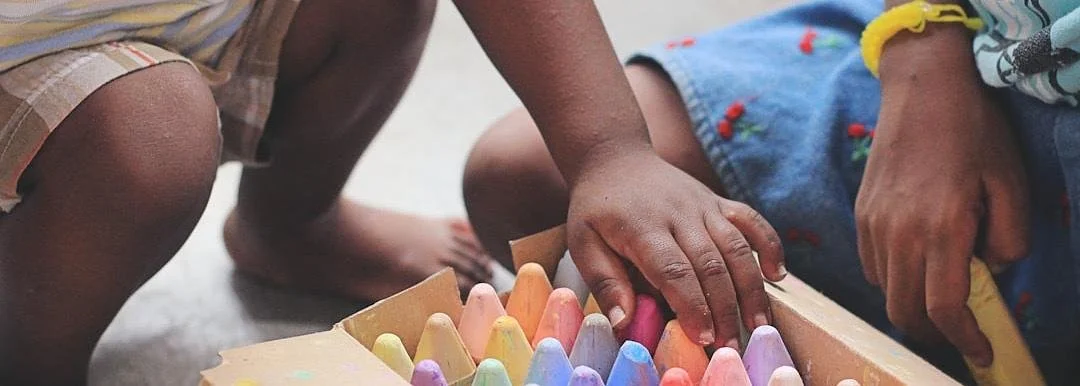
Building Strong Hands for Writing
Did you know that developing strong handwriting skills actually begins with the body—not just the hand? Writing is a complex task that involves coordination and strength from the hand, arm, shoulder, and even the core muscles. In Montessori, we understand that supporting the hand means supporting the whole child—physically, emotionally, and developmentally.

A Montessori Summer
As the school year winds down, we wish you a peaceful, joy-filled summer. This season offers a beautiful opportunity to pause—time to rest, reconnect, and renew. It’s also a chance to gently weave Montessori principles into your family rhythm at home.
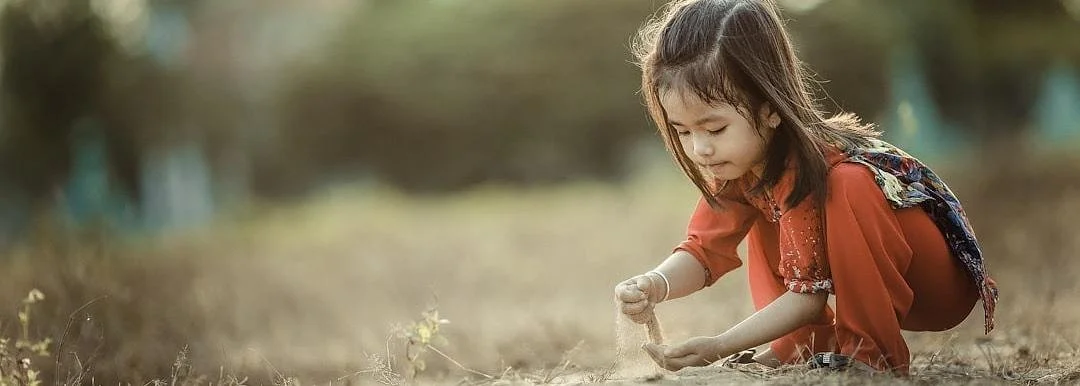
Concentration Starts at Home: Practical Tips for Montessori Families
You may notice it in the quiet intensity of a child at work: a furrowed brow, the tip of the tongue peeking out in concentration, a small hand carefully pouring, scrubbing, or arranging. Perhaps they’re standing, leaning in, completely absorbed. Dr. Maria Montessori described this experience simply and profoundly: “Work is the cure.”

Understanding the Four Planes of Development
Maria Montessori's observations, now backed by modern neuroscience, reveal that human development unfolds in four distinct stages—from birth through early adulthood. Each plane offers unique opportunities for growth, learning, and connection.
Knowing which plane your child is in can help you better support both their academic journey and their social-emotional development at home.
The Gift of Outdated Resources
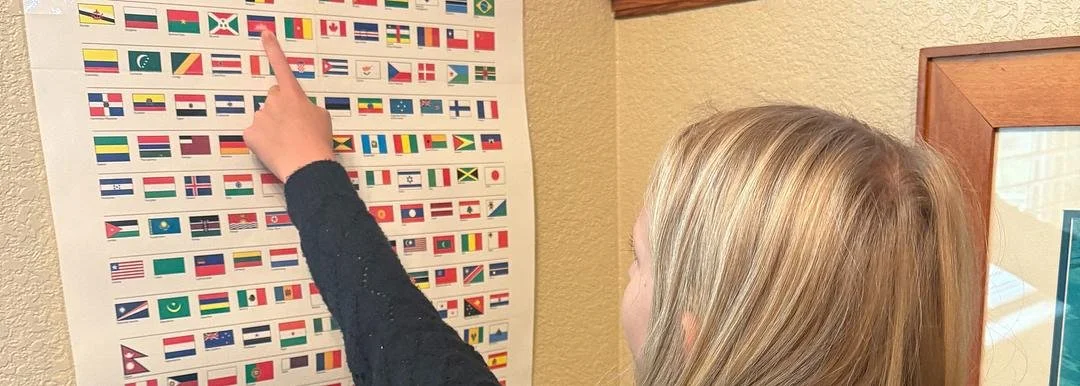
We spend so much time making sure our children have the most up-to-date learning materials: the newest books, the latest maps, the most current facts. But sometimes, the real magic happens when something is outdated. An old poster or atlas can tell stories in a way that up-to-date resources never could.
The other day, my 10-year-old daughter was waiting for her brother to finish his schoolwork when she turned to me and said,"Tell me a country, and I'll find the flag on the poster."
So I began calling out country names, and she happily located their flags on our beloved National Geographic flag poster… printed in 1993.
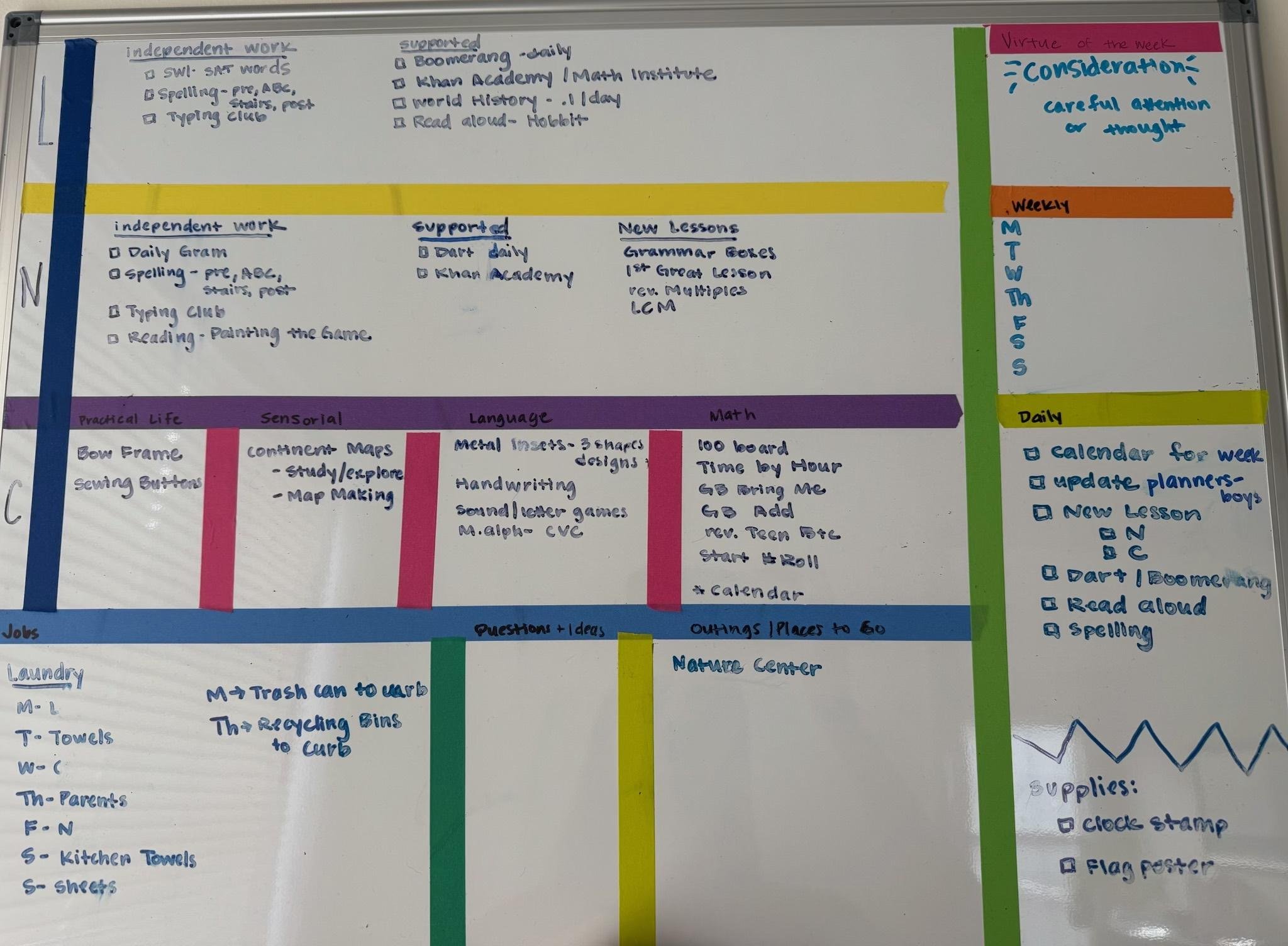
Three Simple Tools That Brought More Flow to Our Homeschool Days
This school year, I’ve added three things that have helped to streamline our day and my planning. For reference, I have 3 children in 3 planes of development - primary, elementary and adolescent. We recently moved, and with our new home’s layout, our homeschool setup has become much simpler. Less space meant rethinking how we stay organized, support independence, and maintain a prepared environment.
Here are three changes that have made a meaningful difference in how our days flow.

The Prepared Adult: Finding Your Center as a Homeschooling Parent
When you’re on a Montessori journey at home, you’ve likely spent time preparing your space—curating materials, designing purposeful areas, and structuring your days around your child’s developmental needs. You’ve probably thought deeply about supporting your child.
But what does it mean to prepare yourself?
When Dr. Maria Montessori wrote about the preparation of the adult, she discussed the preparation of the environment and preparation to work with the child. And, she also included spiritual preparation. Today, many might call it self-care—but in Montessori, it’s more than just a buzzword. It’s about the inner work that allows us, as adults, to show up with presence, patience, and authenticity.
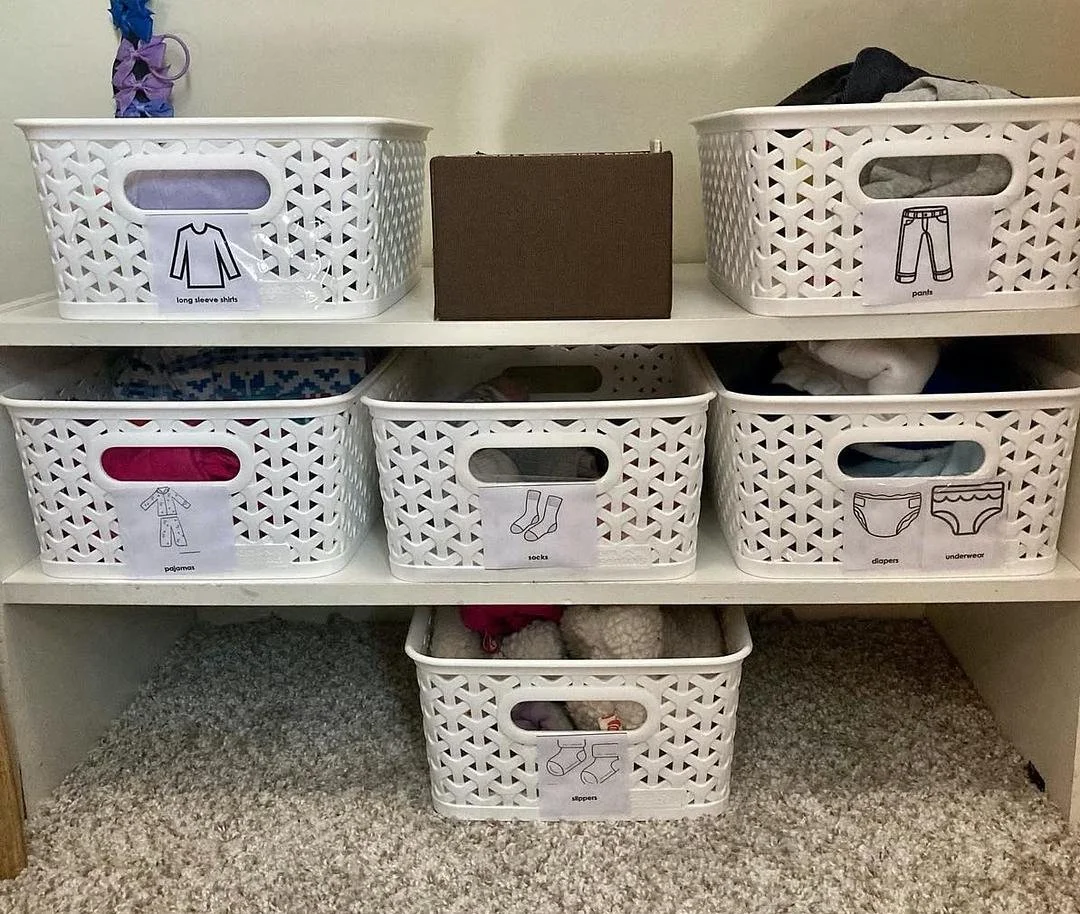
5 Montessori Essentials (That Are Actually Worth It!)
There are so many toys, gadgets, and household items marketed to parents as must-haves for a Montessori home.
Guess what? You don’t need most of them.
After more than 14 years of Montessori parenting, I’ve been reflecting on the items that were truly worth the investment—things that supported our values, lasted through all three of my children, and didn’t cost a fortune.
These are simple, practical items that make it easy to start (or strengthen) your Montessori practice at home from the baby/toddler years on up.
The Story of Measurement
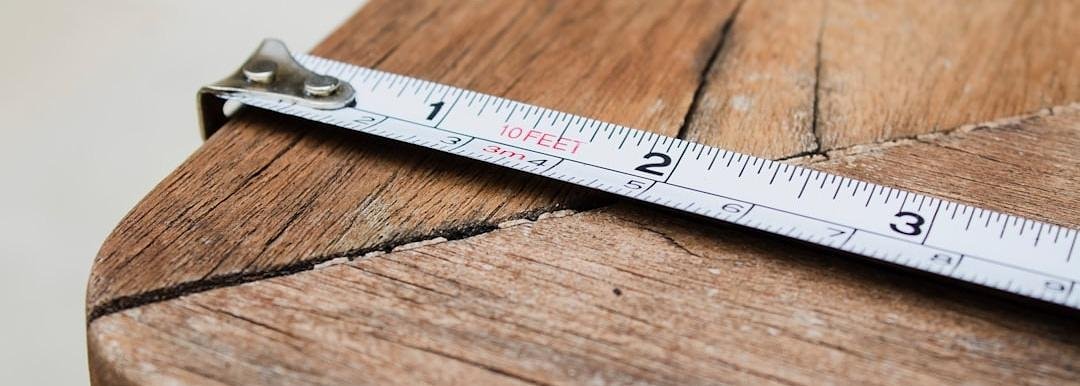
This lesson is best shared as a story or a conversation rather than a formal lecture. The goal is not memorization, but appreciation: helping children value why measurement matters, how it supported human cooperation, and how people used creativity to solve problems of measurement long before rulers and measuring tapes were invented.
You don’t need to memorize every unit. It’s helpful to keep a short list nearby while you tell the story, and to invite children into the experience: compare your hand to theirs, stretch your arms, take a step, and imagine how confusing early measurement must have been when everyone’s body was different.

Building Motivation from the Inside Out
Accountability and motivation are two qualities we hope to cultivate in our children, even though they rarely produce immediate, tangible results. Through the work we do with our children, our goal is to raise thoughtful, capable human beings who can navigate life with resilience. This is no small task.
When thinking about accountability and motivation, several key ideas come to mind: executive functioning, growth mindset, building a collaborative partnership, and practical ways to support accountability at home.

The Montessori Continuum
When it comes to education, there’s a certain kind of peace in doing what feels familiar. And for most of us who grew up in conventional schools, that means worksheets, sticker charts, and tests.
That’s why for a lot of folks, Montessori can feel like a double-edged sword. While they love the novel idea of a more child-centered method of education, they also experience a steep learning curve.
Let’s break down what it takes to navigate the Montessori learning continuum.